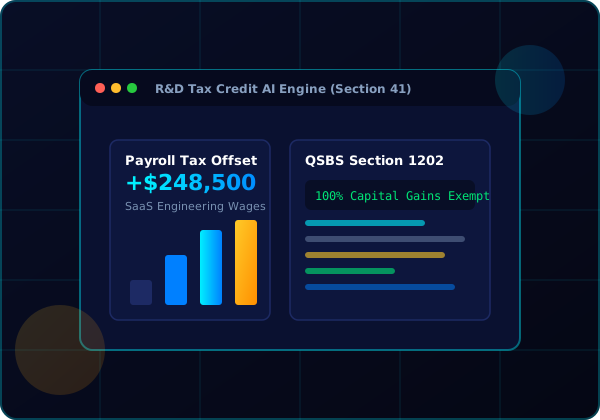
Technology founders often leave hundreds of thousands of dollars on the table by failing to claim the federal and state Research & Development Tax Credit. Under IRC Section 41, software engineering salaries, contractor costs, and cloud infrastructure expenses qualify for direct dollar-for-dollar tax offsets against quarterly Form 941 payroll taxes.
Tech startups face unique regulatory hurdles, notably the mandatory capitalization of R&D expenses under IRC Section 174. We provide precise tracking and amortization modeling to manage the cash-flow impact of these rules. Concurrently, we structure your capitalization table and founder shares to qualify for Section 1202 Qualified Small Business Stock (QSBS), potentially eliminating federal capital gains taxes on your exit.
From initial seed funding to IPO or acquisition, we ensure your equity structure and R&D expenditures are optimized to maximize valuation and minimize tax friction.
Up to $500,000 annually in payroll tax cash savings for qualified software development.
Structure C-Corp founder equity to ensure 100% federal capital gains tax exemption up to $10M upon acquisition.
Automate state sales tax and franchise tax compliance across all 50 states as subscription revenues cross economic thresholds.
Transfer pricing documentation and IP migration strategies for dual-headquarter or remote engineering teams.
Structuring C-Corp formations and tracking holding periods to secure up to 100% tax-free capital gains upon exit.
Implementing compliant accounting methods for deferred revenue, multi-year contracts, and implementation fees.
Startups with less than $5 million in gross receipts and less than 5 years of revenue can offset up to $500,000 of their employer payroll taxes (FICA/Medicare) annually using the R&D credit, drastically extending runway.
Under current law, only research conducted within the United States qualifies for the R&D tax credit. We help you properly segregate domestic W-2/1099 costs from foreign contractor expenses to ensure audit compliance.
While you can often use cash-basis accounting up to $29 million in gross receipts, SaaS companies should transition to accrual accounting (ASC 606) early. Investors require GAAP-compliant accrual financials to properly evaluate Monthly Recurring Revenue (MRR) and deferred revenue liabilities.
Speak directly with a senior tax strategist specializing in your industry's exact regulatory codes and deduction opportunities.
Book Confidential Sector Consultation →