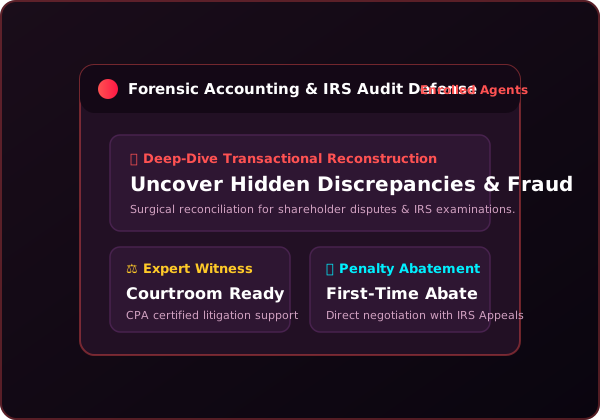
When severe financial anomalies emerge�whether from complex corporate audits, partner disputes, suspected embezzlement, or aggressive IRS examinations�our forensic accounting unit steps in. We reconstruct intricate general ledger histories across multiple bank and digital asset accounts, delivering bulletproof financial reports and direct representation before IRS Appeals.
Facing a high-stakes IRS examination requires more than just submitting receipts. Our Enrolled Agents implement a rigorous Audit Defense Protocol. We establish immediate power of attorney to intercept all IRS communications, reconstruct compromised financial records, and build a pre-emptive defense strategy aimed at resolving disputes at the lowest possible level�or aggressively defending your position in IRS Appeals.
We act as the impenetrable barrier between you and the IRS, ensuring your rights are protected and averting damaging levies and liens.
Surgical reconstruction of multi-year financial statements, cash reconciliations, and intercompany transfers.
Direct representation before IRS revenue agents, stopping bank levies, liens, and aggressive audit demands.
Strategic presentation of reasonable cause arguments to eliminate failure-to-file and failure-to-pay penalties.
Certified CPA and Enrolled Agent expert testimony and forensic exhibits prepared for state and federal court proceedings.
Quantifying exact financial damages and tracing misappropriated assets for civil litigation or criminal prosecution.
Identifying hidden assets, valuing closely held businesses, and determining true disposable income for high-net-worth divorce proceedings.
For most civil audits and appeals, a specialized CPA or Enrolled Agent is highly effective and more cost-efficient. We only recommend tax attorneys when a case crosses into potential criminal tax evasion.
An OIC is a formal agreement with the IRS that settles your tax debt for less than the full amount owed. It is based on your 'Reasonable Collection Potential' (RCP) and is an excellent option for taxpayers facing severe financial hardship.
Generally, the IRS has three years from the date you filed your return to initiate an audit. However, if there is a substantial understatement of income (over 25%), the statute of limitations extends to six years.
Speak directly with a senior tax strategist specializing in your industry's exact regulatory codes and deduction opportunities.
Book Confidential Sector Consultation →